

MVP Discs





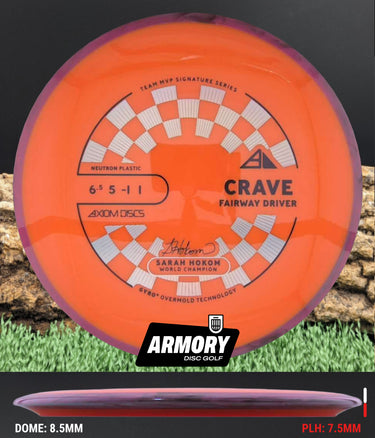

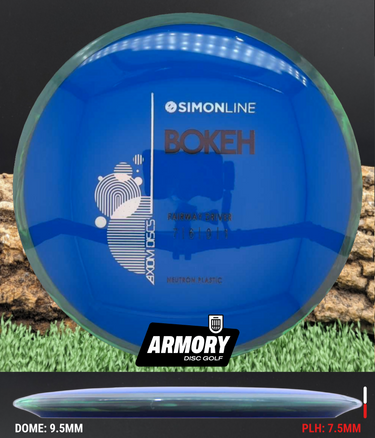


The Complete MVP Discs Collection Hub
MVP Disc Sports is built around GYRO overmold technology, a two-part disc with a separate rim molded around the flight plate. That puts more of the weight on the edge, so MVP discs hold their spin, fly a little straighter and stay on line longer than you'd expect for their speed. From distance drivers to throwing putters, MVP discs are known for premium plastic, consistent molding and flight paths you can trust round after round. This hub breaks down every MVP mold we stock by slot, so you can find the right one and then pick your exact disc. Want to compare across brands? Browse our full disc golf disc collection, or check out the other two brands in the MVP family below.
Understanding MVP Flight & Stability
Because the rim carries more of the weight, MVP discs keep their spin longer than a normal disc of the same speed. In practice that means more glide on slower throws, a longer straight section before the fade, and a smoother finish instead of an early dump. The lineup is organized in clear speed slots, so it's easy to build a bag that steps up evenly from putter to driver.
What this collection brings to your game:
- Straighter, Longer Flights: The GYRO rim keeps the disc spinning, so it holds the line you put it on longer, especially when you're not throwing it as hard.
- A Disc for Every Slot: MVP covers everything from 1-speed putters to 14.5-speed drivers, with understable, straight and overstable options at almost every speed.
- Plastic Choices That Change the Flight: Neutron, Proton, Plasma, Fission and Eclipse each feel a little different and shift the stability a little, so you can dial in a mold to your arm.
MVP Distance Drivers
MVP's distance drivers run from easy-throwing understable drivers to beefy wind fighters. Match the driver to how hard you throw and the shape you want, not just the fastest number on the stamp.
- MVP Wave (11 | 5 | -2 | 2) - A fast, glidey driver that holds a turnover and still comes back. Great for distance lines and hyzer flips.
- MVP Photon (11 | 5 | -1 | 2.5) - The stable 11-speed. It goes straight and fades reliably, so it’s a go-to for controlled distance and moderate wind.
- MVP Orbital (11 | 5 | -4.5 | 1) - The most understable driver in the lineup. Easy distance, rollers and long turnover lines.
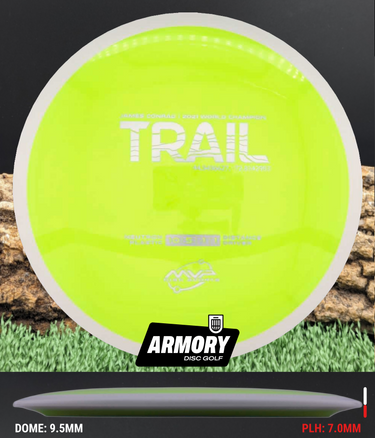
- MVP Trail (10 | 5 | -1 | 1) - One of the most popular MVP drivers. Workable distance with lots of glide and a soft finish.
- MVP Control (10 | 5 | -0.5 | 2) - A neutral control driver for straight tee shots that you need to land on a spot.
- MVP Catalyst (13 | 5.5 | -2 | 2) - A high-speed driver with a lot of glide and some turn, made for max distance on a smooth throw.
- MVP Octane (13 | 5 | -1 | 2) - A stable 13-speed for players who can get it up to speed and want straight distance with a dependable fade.
- MVP Dimension (14.5 | 5 | 0 | 3) - MVP’s beefiest distance driver. Built for headwinds and power forehands.
- MVP Relativity (14.5 | 5.5 | -3 | 1.5) - A fast, understable max-distance driver that turns over and carries a long way.
MVP Fairway Drivers
MVP fairway drivers are great for controlled tee shots, woods golf and placement drives. Compared to the high-speed drivers, this slot gives you more accuracy and a cleaner balance between distance and control.
- MVP Tesla (9 | 5 | -1 | 2) - A stable 9-speed that holds a line at full power and finishes predictably. A workhorse for most arms.
- MVP Inertia (9 | 5 | -2 | 2) - A little more turn than the Tesla, so it’s easier to get out there and shape on hyzer flips.
- MVP Impulse (9 | 5 | -3 | 1) - An understable 9-speed for easy distance, turnovers and players who don’t throw as hard.
- MVP Volt (8 | 5 | -0.5 | 2) - A straight-to-stable fairway driver that goes where you aim it. Great for tight fairways.
- MVP Servo (6.5 | 5 | -1 | 2) - A reliable straight-to-stable fairway driver for controlled placement shots.
- MVP Resistor (6.5 | 4 | 0 | 3.5) - The overstable fairway driver for wind, forehands, skip shots and a dependable fade.
- MVP Signal (6 | 5 | -3 | 1) - An understable fairway driver that floats and holds a turnover. Great for woods lines and newer players.
- MVP Relay (6 | 5 | -2 | 1) - A slightly understable fairway driver for smooth, long anhyzer and straight lines.
MVP Midranges
MVP midranges are built for a clean release, steady glide and shots you can shape. They're the discs you reach for on straight approaches, technical fairways and midrange drives where accuracy matters more than distance.
- MVP Reactor (5 | 5 | 0 | 1.5) - A dependable workhorse midrange with enough stability to trust on controlled lines.
- MVP Matrix (5 | 4 | -1 | 2) - A straight midrange that holds whatever angle you release it on.
- MVP Detour (5 | 5 | -2 | 1) - A more workable mid for turnovers, hyzer flips and smooth shot shaping.
- MVP Uplink (5 | 5 | -3 | 0.5) - The most understable MVP midrange. Floats, turns and is easy to throw far.
- MVP Deflector (5 | 3.5 | 0 | 4) - The overstable midrange for wind, forehands and shots that need to fade hard at the end.
MVP Putters and Approach Discs
MVP putters and approach discs cover putting, throwing, floaty approach shots and controlled short-game lines. Some are built for straight glide and angle control, while others give you a dependable fade and hold up in the wind.
- MVP Watt (2 | 5 | -0.5 | 0.5) - A glidey throwing putter built for straight flight and maximum carry with very little fade.
- MVP Ohm (2 | 5 | 0 | 1) - A straight putter with a small amount of fade at the end. Great for putting and straight approaches.
- MVP Nomad (2 | 4 | 0 | 1) - A stable, grippy putting putter that holds its line in the circle.
- MVP Anode (2.5 | 3 | 0 | 0) - A dead-straight putting putter with low glide. Goes where you aim it.
- MVP Spin (2.5 | 4 | -2.5 | 0) - An understable putter that turns easily. Great for turnover approaches and players who don’t throw as hard.
- MVP Ion (2.5 | 3 | 0 | 1.5) - A stable putter with a little fade that gives you confidence in the wind.
- MVP Atom (3 | 3 | -0.5 | 0) - A straight putt and approach disc with a small rim that’s easy to release cleanly.
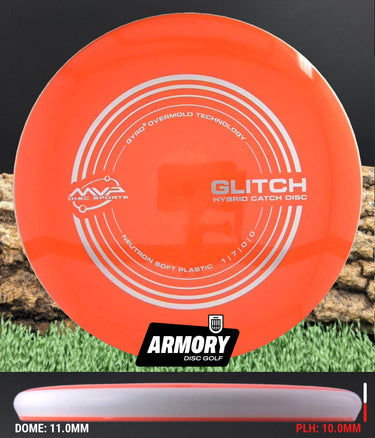
- MVP Glitch (1 | 7 | 0 | 0) - A soft, super glidey 1-speed for touch shots, warmups and floaty approaches.
- MVP Entropy (4 | 3 | 0 | 3) - An overstable approach disc for forehands, wind and shots that need to stop.
- MVP Stasis (2 | 1 | 0 | 2.5) - Built for controlled placement shots with almost no glide, so it lands close to where you aim it without drifting long.
How MVP Fits in Your Bag
An easy way to build around MVP is to pick one disc from each slot that matches how hard you throw: a Watt or Ohm to putt, a Reactor or Detour midrange, a Servo or Tesla fairway driver and a Wave or Photon driver. Add a Resistor or Deflector for wind and forehands, and a Signal or Orbital for turnovers. Lighter Fission plastic is a great option for players who want easier distance, and Plasma or Proton is the way to go if you need a mold to fly a little more stable. If you like the GYRO feel, MVP's sister brands Axiom Discs and Streamline Discs use the same overmold technology with their own molds and colorways.
Frequently Asked Questions About MVP Discs
What is MVP's GYRO overmold technology?
Every MVP disc is made in two parts. The rim is a separate, heavier ring molded around the flight plate, so more of the weight sits out on the edge. That helps the disc hold its spin and its line longer, especially when you're not throwing it as hard. You can see and feel the seam where the rim meets the center, and that two-tone look is how you can spot an MVP family disc.
What's the difference between Neutron, Proton, Plasma and Fission plastic?
Neutron is MVP's opaque premium plastic. It grips well and is the benchmark for each mold's flight. Proton is translucent and a little firmer, and it usually flies a touch more stable. Plasma has a glossy, shiny finish with a grippy feel and tends to fly a little more overstable than Neutron. Fission is a lighter, foamed plastic, so you get the same size disc at a lower weight, and it flies a little more understable and glides more. Eclipse glows, and Electron is the soft, grippy putter plastic.
Are MVP discs good for beginners?
Yes, as long as you start with the slower, straighter molds. A Watt or Ohm putter, a Detour or Reactor midrange and a Servo or Signal fairway driver will teach you clean lines without fighting the disc. The GYRO rim helps here because it keeps the disc spinning and flying straighter when you don't throw it as hard. Save the Dimension, Octane and Catalyst until you can get more speed on your throws, and look at Fission plastic if you want easier distance.
Which MVP discs are the most overstable?
For wind and forehands, the Dimension is the beefiest distance driver, the Resistor is the overstable fairway driver, the Deflector is the overstable midrange and the Entropy and Stasis are the overstable approach discs. Plasma and Proton runs of a mold usually fly a little more stable than Neutron, and Fission runs a little less.
Ready to build your MVP bag? Browse our live inventory below to pick your exact weight, color and plastic in the MVP Discs Collection, or explore the wider full disc golf disc collection to find your next workhorse!